Showing posts with label Africa. Show all posts

Monday, December 12, 2011

Come And See What The Lord Has Done!

Africa, Days 6 and 7

I still do not know why God asked me to go to Kazungula, a border point between Zambia and Botswana, and share the love and message of Christ with truck drivers there.  I know only that he did and I went in obedience.  The result was an awesome display of God’s faithfulness, goodness, grace, and desire to seek after those who are lost.  What our small team (me, Chris, Martha, Mary, Enala, and Howard) saw in Kazungula on December 9 and 10, 2011 is not like anything we have ever seen before, or may ever see again.


We talked to about 90 truck drivers in our two days in Kazungula. When we arrived the first day, 62 trucks were lined up to cross the border (one at a time on the single working ferry) and most wait 5-6 days for their turn.  


At first glance, there appears to be nothing there that is familiar except the sun above and the earth underfoot.  And the sun is so hot, sweat runs down your back just standing still.  The earth is so dusty, you are covered with grime and dirt within the first few minutes.  Exhaust fumes from the starting up and slight movement of the trucks in line fill the air.  Empty water bottles, wrappers, and cans litter the ground. Children anywhere from 5 to 17, boys and girls, walk up and down the line of trucks by themselves selling eggs, fish, CDs and DVDs.  Flies swarm.  There are no bathrooms and there is no water.  Women and girls go truck to truck offering themselves for money.  The truck beds are loaded with copper, hydroxide, tobacco, and other things.  Men gather on the side of the road cooking nshima and chicken that they have bought in the market.  Many have been drinking beer since the early morning because it is the only way to face 5 days in line in this place.  Truck drivers are one of the primary carriers of HIV and AIDS.  Sixty-five percent of the population of Zambia has HIV or AIDS.  

When you see Kazungula, you may be tempted to believe God has left it, or perhaps was never there.  Each truck driver faces unbelievable loneliness and boredom.  They are away from their wives and families, sometimes for up to a year at a time.  Each confronts overpowering temptation.  Most of them doubt God could ever want them.  Most of them believe they have fallen too short and too often.  Most of them question if God is even present in their world.  They seem to have concluded that they, either by choices made or circumstances, are beyond God’s reach and unable to be saved.      

But, you see, no place and no man (or woman) is beyond God’s reach, not even in Kazungula.  No one has made too many bad choices or finds themselves in circumstances that cannot be redeemed by God.  I, and the members of the team (all from Zambia), had been praying for weeks that God would go before us and prepare the hearts of the truck drivers we would meet for the love we had for them.  When we arrived at the border, we prayed again, together, and broke off into teams of two.  Our mission was simple: approach the drivers, introduce ourselves, and ask them about themselves – where they were going, where they had come from, what were their struggles – and then tell them we were there to let them know that there are people in the world who care about them and a good God who loves them.  

It did not take long to know that God had indeed gone before us.  In just minutes, we found not the eyes of dangerous, untouchables, but the eyes of Jesus.  The first day, 28 truck drivers committed their lives to Christ.  We gave each of them New Testaments and bright-colored bracelets that said “God loves me,” “Saved,” “I love Jesus,” “Forgiven,” “John 3:16”, or the one they all wanted most: “WWJD” (What Would Jesus Do).  Word of our presence spread quickly; we stood out, after all.  And, if you looked around Kazungula on December 9, you saw many men wearing their bracelets, prompting further conversation no doubt.  Suddenly, it was like light had entered Kazungula.  We listened to their stories: how painful it is to wait for days to cross the border; how the heat makes sleep nearly impossible; how much they long to be home with their families; how they cannot attend church because they are always moving from one place to another; how they have failed God in so many ways; how they feel incapable of resisting sexual temptation.  One man, who was a Christian already, told me he was so relieved to see us because it reminded him of God’s presence.  


Our second day in Kazungula was similar.  Twelve more drivers gave their lives to Christ and dozens of seeds were planted, which we trust God will germinate and grow in his own time.  On our way back to Livingstone, which is where we stayed, both days, we could not find words to explain what we had experienced.  So, all we could do was to sing loudly with clapping hands and smiling faces: “Come and see, oh!  Come and see!  Come and see, oh!  Come and see!  Come and see what the Lord has done!  Come and see what the Lord has done!”  None of us on our team could have done what we did in our own power.  Only God could have and did accomplish the reconciliation of 40 individual souls to himself through Christ.  And with each one, all of heaven celebrated.  (Luke 15:7)   

There is, of course, still no bridge that connects Zambia and Botswana at Kazungula, but because God used us to demonstrate the sufficiency of his grace, his far-reaching and overflowing love, and his overwhelming presence, there is infrastructure there that is stronger and longer lasting than any bridge that could ever be built. 

For the truck drivers in Kazungula, I pray:

Out of the depths I cry to you, O Lord;
O Lord, hear my voice.
Let your ears be attentive
to my cry for mercy.

If you, O Lord, kept a record of sins,
O Lord, who could stand?
But with you there is forgiveness;
therefore you are feared.

I wait for the Lord, my soul waits,
And in his word I put my hope.
My soul waits for the Lord
more than watchmen wait for the morning,
more than watchmen wait for the morning.

O Israel, put your hope in the Lord,
for with the Lord is unfailing love
and with him is full redemption.
He himself will redeem Israel from all their sins.  

(Psalm 130)

Amen.

Thursday, December 8, 2011

White Butterflies

Africa, Day 5 (yesterday)

Some things on the 12-hour drive from Ndola to Livingstone:

a brown dog hit on the road by a van;
a little white dog surrounding the brown dog in mourning;
fresh mangoes;
yoked oxen (my yoke is easy and my burden is light);
6-8 police stops and two border stops;
1 police stop in which we are cited for not having a fire extinguisher;
the police officer who says: we have nothing like forgiveness here;
stop in small town to buy a fire extinguisher;
a debate about whether people in a field were weeding or planting maize;
discussion of our favorite person in the Bible other than Jesus (Nehemiah, Jeremiah, David, Philip, Paul (2));
watermelons, tomatoes, fruits, pots;
cactus;
open land green land;
irrigation systems;
fluffy, majestic clouds;
a Subway sandwich shop;
the trampoline at The Fig Tree Restaurant;
Chips Ahoy and Ritz Bits;
samosas;
using the 1000 Kwacha (20 cents) bathroom with no door;
fresh air blowing through the van;
sharing stories of our encounters with Christ;
cold Coke;
an overturned truck;
prayers for protection and expressing thanks;
and white butterflies going ahead of us all the way.

Monday, December 5, 2011

Marching in the House of God

Africa, Day 3, Ndola, Zambia

I think the days here are longer, or perhaps it just seems that way because of the expansive life, song, and beauty in every moment.    

Last year, we went to New Hope Christian Centre, a ministry that cares for, feeds and educates orphans and vulnerable children, many of whom have HIV themselves.  I loved these children and I wanted to give them something, but I hadn't brought anything with me.  Instead, they gave me the most amazing gift -- they sang I Love You Jesus Deep Down in My Heart in the most angelic, beautiful voices.  That song, sung by those sweet voices has stayed with me for the last 14 months.  I have heard their voices resonating inside me and when I tell Jesus I love him, I often do so through that song.  This year, I wanted to give them a gift in return for what they gave me.  So, before I left the US, I ordered a hundred colorful bracelets that say I Love You Jesus, or God Loves Me, or WWJD.  I brought them with me to hand out.  Today was delivery day!  


I slid a bracelet on each child's arm (there were about 45 of them) touching their hands and arms, looking them in the eyes and telling them, "God loves you;" "Jesus loves you."  Some whispered "thank you."  Others smiled.  Still others just stared at me with curiosity.  But they sang a song again: We are marching in the house of God.  They marched around their little one-room schoolhouse, dancing, singing and laughing.  I have not experienced the house of God in this way before, but let's just say you may see me marching around at church very soon.  

"Jesus called the children to him and said, 'Let the little children come to me, and do not hinder them, for the kingdom of God belongs to such as these.  I tell you the truth, anyone who will not receive the kingdom of God like a little child will never enter it."  (Luke 18:16-17)

Guess I'll have to go back and bring another gift . . .

Sunday, December 4, 2011

Walk in Love

Africa, Day 1

It is 2:48 a.m. I have been awake for 25 minutes now, tossing and turning.  My body thinks it should be up doing instead of down resting.  I am simultaneously cold and hot.  Bug noises rise and fall outside and I remember Michigan summers with my bedroom window cracked open to the warm air.  My heart and mind can’t quite hold the fullness of the day that has passed, every moment of it overflowing with life.  After the very long plane journey, I arrived in Johannesburg, South Africa at 7:30 a.m.  I said goodbye to my seatmate Bruce, a white Zimbabwean who now lives in Calgary, Canada, and with whom I shared 12 hours in the sky running from London to South Africa.

Straight from the airport, I went with my pastor friend Edgar to the home of a man named Mike.  Two little dogs greeted us and the rich earthiness of the summer air nearly took my breath away.  At home, the warmth of this sun will be veiled for months.  Mike and his wife run a ministry called Dumpsite.  Each Saturday morning, they make a bowl of meat, rice, and vegetables for, on average, 200 people who live on a large landfill, collecting, sorting, and then selling garbage scraps and recyclables.  They also make two large tubs of juice.  Edgar and I helped load the bowls of food into a van along with the juice and black plastic bags filled with shoes and clothes.


Mike explained that when we arrived at the dump, he would preach the gospel and then everyone would gather in groups of ten.  Then, we would give each group a palate of food bowls, a black plastic bag, and a cup of juice.  Distributing the food, drink and clothes this way creates community and accountability, preventing line-jumping, pushing to the front.

We followed Mike and his team in their van to the dumpsite where people had already started to gather.  Mostly women and little children.  They gathered in a semi-circle around the van the massive dump looming large in the background.


Mike shouts praises to God and those gathered echo his praises.  He passes out a single sheet of paper to each person, which includes the text from Ecclesiastes 3:1-14, part of which promises that “God has made everything beautiful for its own time.  He has planted eternity in the human heart, but even so, people cannot see the whole scope of God’s work from beginning to end.”  (v. 11)  This was quite a promise to contemplate among a crowd suffering from deep, abiding hunger, deathly sickness, chronic foot and belly pain.  God has made everything beautiful for its own time.  Has made.  Everything.  Beautiful.  I can’t help but wonder how any of this is beautiful, this aching hunger, this living amongst garbage, and this lack of access to clean water and basic sanitation.  I can only agree that I cannot see the whole scope of God’s work and it must not be time yet.  Mike tells the group that if any among them has AIDS, God loves them. If any among them has HIV, God loves them.  He tells them that though their pain and suffering is so great now, God has planted eternity in their heart and through belief in Christ, eternal, everlasting beauty is on the way.

After preaching his message and praying, Mike asks the people to disperse into groups and we hand out the food, drink and clothing.  After this is done, a line forms and Edgar explains that those in line had prayer requests for Mike.  Mike listens to each one, types each prayer into his mobile device, and then lays his hands on the shoulders, on the feet, on the stomach, on the eyes depending on the request.  He asks God to heal, to provide, to protect.  For some, he thanks God for answered prayer.  Mike will forward these prayer requests to a team and he and the team will pray for each person all week.  Next week, he will come and do this again. 

Next, we travel to the other side of the dump where hundreds of people have set up “homes” among the garbage.


Mike has brought us here, where he will distribute fresh vegetables and heavy-duty nails in an effort to keep the homes standing.  As we walk through this village, scraps of garbage, colorful plastic bottles and caps, and animal bones litter the ground.  We walk a winding path looking for residents to tell them we are here with nails and food.  Faces begin to appear in doorways and people come out to see us.  We shake hands and exchange names and greetings.  Their hands are warm and dry in mine.  They call out Mike’s name from afar, smiling broadly when they see he has come.  He touches them and asks them about their families.  One man approaches Mike and explains that he needs to see a doctor, pulling down his shirt over the shoulder revealing large red sores that he says cover his chest and back.  He has AIDS and it is eating him from the inside out.  The man looks at me and says he needs a doctor.  Another man staggers behind us, talking nonsense, younger men holding him up as he walks.  Mike says this man will die in a few days.   

“Many of them are drunk and have HIV and AIDS.  We cannot judge them.  We don’t know how it is to live here,” Mike says as we walk back to the van.  “I only can love them.”  By now, there are dozens following us to get the vegetables and nails.  As we walk, Mike shows me homes that have collapsed and not been built again.  “The person who lived here probably died and they just leave the home like this.”  There are two well-built structures that Mike raised money to have built for two elderly men so that they can live the remainder of their lives with protection from the rain and some amount of dignity.  I say my goodbyes to Mike and ask what will happen with the man who needs to see the doctor.  Without hesitation, he says “I will take him now.”  And suddenly I see the beauty.

Before I left home, my 11-year old daughter handed me a stack of letters she wrote for me to read while I am away, one for every other day.  When I return to my lodging after the visit to the dumpsite, I read today’s letter, in which she instructs me to read 2 John 6: “And this is love: that we walk in obedience to his commands.  As you have heard from the beginning, his command is that you walk in love.”  This passage allows me to piece the day together and see how we can and so often do walk through life, and love only on the side, only when the opportunity to love finds us or arrests our movement.  But, in Mike, I see that to walk in love is a whole other thing.  It is to go where love is needed and provide it.  Where this need and this provision collide, there is the beautiful.


Saturday, October 22, 2011

If It Is God Asking, What Else Can You Do?

In just over a month, I leave for Livingstone, Zambia to set up church on the side of the road for long-haul truck drivers who wait to cross the Zambezi River for up to six days because at the point that connects Zambia and Botswana, there is no bridge.  This is a crazy assignment.  I have met one long-haul trucker in my life.  I am a white woman mother lawyer writer from the Midwestern United States.   What sense does this make?  Not much.  And yet, I have no choice in the matter.  Really.   

See if it makes any more sense once you know the background:  In September 2010, I went with a team to Ndola and Lusaka, Zambia to teach pastors.  (If you want to read more about that, see entries 9/13-9/28 here: Trip)  While there, we had an opportunity to go to Livingstone, which is at the southern tip of Zambia, on the border of Zambia and Botswana.  (See Map)  

As we got close to the border, I noticed that there were between 50 and 60 long-haul trucks lined up on the side of the road.


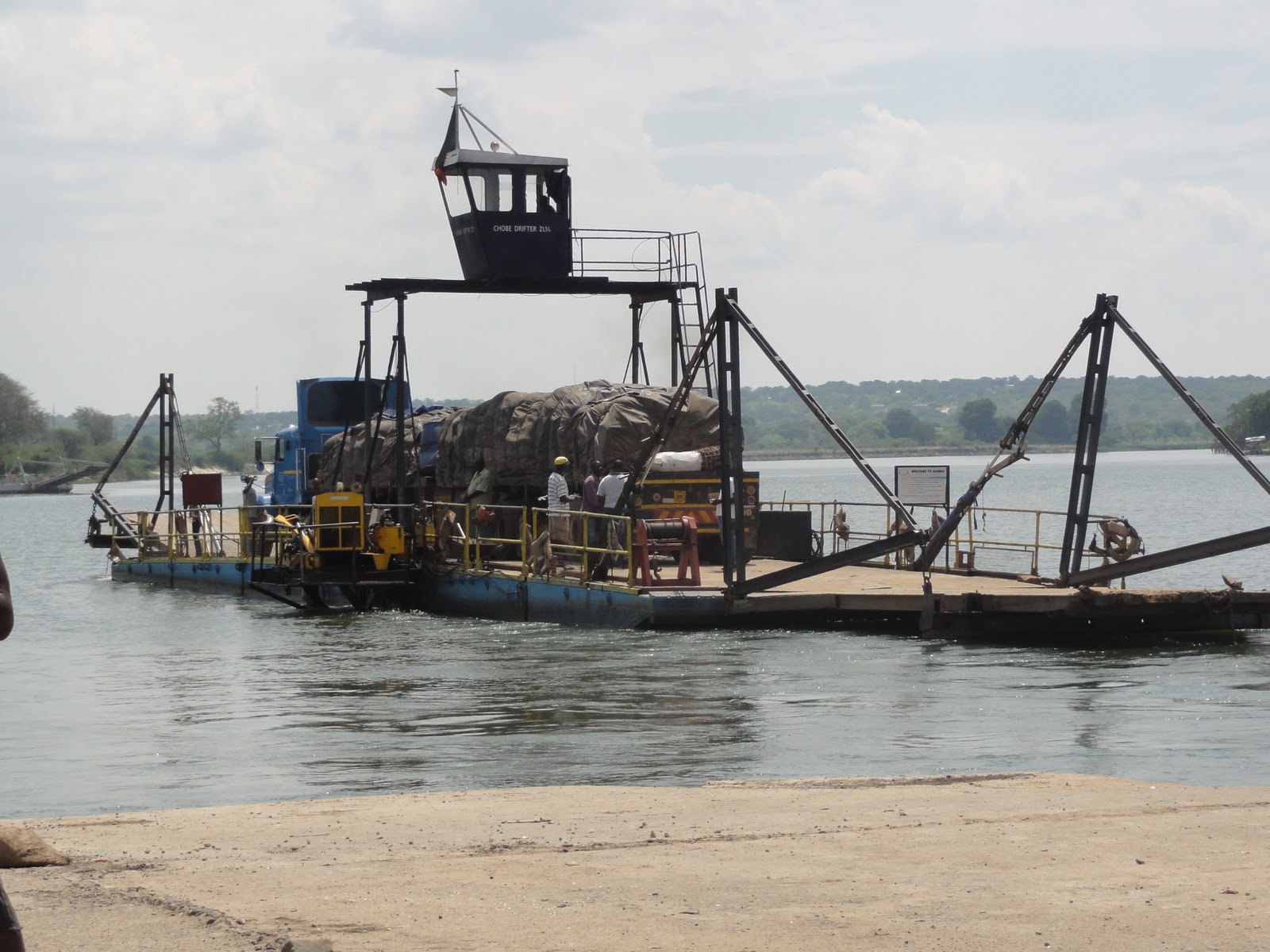
When I asked about this, I was informed that there is no bridge across the Zambezi and so trucks line up and wait to get taken across on a ferry one truck at a time.  What?  Yes, these truckers wait 5-6 days on average to get across the River on this ferry: 


Something took root in me at that moment.  Why doesn’t someone build a bridge?  How much would it cost?  How many additional days are these truck drivers away from their families because they have to wait here?  Doesn’t the stuff they are hauling spoil?  Does it get to where it needs to go on time?  What happens at night when loneliness sets in for these truck drivers?  What about their families back home?  Can they survive for the weeks that these drivers are away?  How are the drivers spending their time as they sit and wait?  Are they eating?

I could not let this go.  And I began to see this little border crossing as a microcosm of what was wrong on a much broader scale – a lack of infrastructure was causing all kinds of social problems: a breakdown in the family, sexual promiscuity, loneliness, the spread of HIV/AIDS, hunger, and despair.  I wasn’t sure if I was right about this, but it is what I began to see.  For the rest of the trip, I talked to anyone and everyone who would listen about the fact that there was no bridge and what could be done, what was being done.  I prayed about it just about every day.  I learned that Zambian presidents had been promising to build a bridge across the Zambezi in Livingstone for 60 years.  And yet, in 2010, there was no bridge. 

Now, keep in mind that during my visit to Zambia, I also learned about HIV/AIDS projects that care for dying people and their families, orphans who cannot afford school uniforms to go to school, huge villages that have no access to clean water, and more.  These things started to feel to me like they had their cause in something else – like the absence of infrastructure, the absence of bridges.   

Just days after I got back to the U.S., I told a colleague of mine that I felt strongly that God was calling me to form a church on the side of the road for the truck drivers.  My colleague said: “Don’t do that.  Build the bridge.”  For months after that conversation, I researched bridges and what was being done to build a bridge.  Turns out that much is being done and it is a very complicated process because it involves the sign-off of three countries – Zambia, Botswana, and Zimbabwe.  The project will cost $100 million and all sorts of engineering, social, and economic studies have been done.  In fact, the proposed bridge looks amazing. 

So, a bridge will be built.  Problem solved, no more long waits, no more loneliness, hunger, despair, right?  That is not the sense I got.  A steel bridge, no matter how spectacular, will not relieve the loneliness and despair, the thirst of the soul.  Something even more fundamental is needed: the One who gives living water.  (John 4:10)  Otherwise, the thirst will return somewhere else, sometime else, with someone else.  (John 4:14)

And so, I will meet a team of Zambians there and we will set up on the side of the road, serve food, sing music, and preach the gospel to truck drivers in Zambia and Botswana.  This is the call, and I have no choice.  What a privilege!  Have I ever felt more purpose, more fulfilled, more loved?  As Dietrich Bonhoeffer explained the immediate response of Levi when Jesus called him to follow in Mark 2:14, when “the cause behind the immediate following of call by response is Jesus Christ himself,” we follow at once. (Bonhoeffer, The Cost of Discipleship at 57)  Or, as a close friend said to me as I described to him a feeling that this project seemed out there and that no one really understood why I was doing this: “If it is God asking, what else can you do?”  Indeed.

Friday, October 15, 2010

Finally, my takeaways.

I've gone through a long thought process since I've been back from Africa and have had time to think through all that I saw and heard and felt. I've looked at my photographs a dozen times to help me understand what my takeaways are, you know, how I can best describe the trip in a few sentences (close to impossible). Here are some I'm thinking about and the pictures that go with them.  What do you think?

1) The local church is the hope of the world.

Clean water.  The church being the church.

See last line on sign: Minister: All Believers. 

The church caring for orphans.
2)  Every one of us is important to God.  Shoes or no shoes, white skin or black skin, here or there.


3)  The Big Bang Theory simply doesn't make any sense once you look around.


4)  Pay attention to the journey, not just the destination.


5)  A great team makes all the difference.


6)  Don't eat just any piece of fruit you find on the ground.


7)  Warthog tastes like chicken.  Not really.  More like pig.

Before.

Marinated Warthog Fillet.  No one would order that!
After
8)  Don't ever take Tamiflu.  Long story.  No pictures.  


Tuesday, September 28, 2010

Still Without Sufficient Words . . .


Well, we're back now. The most common question to me has been: "So, how was it?" My most common response: "I don't have the words yet." And then I say words that are so inadequate: amazing, incredible, unbelievable, indescribable -- all words that have no descriptive meaning. Last night someone asked me for a "one-word takeaway" from the trip. Again, couldn't come up with one word, but the phrase that best encapsulates the way I feel the more I think and pray is this: The local church is the hope of the world. Anyway, as I continue to come up with additional words, I thought I'd share some of the thoughts I've had upon re-entry:

Now what?
Things have to change.
This is really hard to be back.
So much stuff everywhere.
What steps can I take today?
I miss my team.
I'm totally disoriented.
God, what would you have me do now?
How can I go back to the way things were?
Would it be better if I just didn't see the things I saw or know the things I now know?
I have taken so much for granted.
I am so blessed.
What have I been complaining about?
Why do I have four watches?
When do I get to go back?
How can I make sure my daughter gets this?
I need to focus.
I need to dream bigger.
One foot in front of the other.
Maybe a party would help.
I need some tea.
How long will it take for me to forget?
Please let me remember.
God, please show me the way.
I'm 35 and I'm just now getting this? Ugh.
I wonder if this Zambia soccer shirt will hold up in the wash.

(Also, I did add some pictures to previous entries, which I couldn't do while in Zambia because of a relatively slow internet connection.)

Tuesday, September 21, 2010

I Didn’t Know Until I Knew


On Saturday, our team flew from Lusaka to Livingstone for a two-day trip to see Victoria Falls and experience a day safari. Before we left, though, we went to George Complex, a community of 200,000 people near Lusaka. Many of the women and children there walk more than a mile everyday to get clean water. As a result of this long walk for water, most of these girls can’t go to school. They carry 20-liter containers on their heads and babies on their backs. Girls as young as 8 carry these containers. We visited that day because those who live near the Pentecostal Church in George Complex were receiving clean, safe water for the first time. A bore hole was donated by people from Willow Creek Community Church. This bore hole will serve about 1000-2000 people who live in the village. We met many of these people. Many were children. They were beautiful, with deep dark eyes and smiles you wouldn’t believe were possible.

There are things about these children that are different than the children we know. Many of them don’t have shoes. They wear clothes that are too big or too small, or clothes that are out of season. Many are orphans or have only one parent to care for them. At the most basic of comparisons, though, they are the same. A woman and her daughter stood near me. The mother asked if I would take a picture of her and her daughter. The daughter immediately became resistant, asking her mother why she would do this! How embarrassing! I asked her, “How old are you?” She said, “Seventeen.” I said, “Ah, I can see why you don’t want to be anywhere near your mother!” They both laughed so much they bent over. Not so different.


It was an incredible celebration. Government officials were present, pastors were present, community leaders were present. Families were there. Mothers, fathers, children. Once the bore hole was “commissioned” by the member of parliament who was there, the mothers and girls began to pump the water into buckets they had lined up. Fresh, clean water flooded out of the pump and we all danced and sang, praising God for what he had done through his church. I took hundreds of pictures of the water, the children, the mothers, the pastors, and our team.


The meaning of this didn’t really sink in until later that day, though.


As we flew to Livingstone, I reflected on my experiences in the last week. We had three days of incredible teaching in Ndola where we taught about the importance of demonstration of and proclamation of God’s kingdom. In other words, pastors should preach, yes, but they should inspire and equip their church should also be out in the community addressing the needs of the community, like feeding the hungry, caring for those with HIV/AIDS, loving orphans and the most vulnerable people. Without these things, there is, as Richard Stearns would say, a “hole in our gospel.” After the teaching, we went to the Ndola market, an experience that won’t ever fade from my mind. I wrote about it several days ago and it sparked so much heartbreak and questions, and yet, was a harvest for God’s work. The day after we went to the market, we visited the little children at the New Hope Christian Centre and sang I Love You Jesus Deep Down In My Heart. And the day after that, we went to the bore-hole dedication.

So, here is what I realized – my math at its best:
TEACHING + MARKET + BORE HOLE DEDICATION = THE LOCAL CHURCH IS THE HOPE OF THE WORLD

I had heard this. I thought I knew what it meant. . ..until I knew what it meant. You know?

Friday, September 17, 2010

I Love You Jesus Deep Down In My Heart


We had a day off from teaching today and were reminded of our love for Christ through experiences outside and inside of our team. First, we went to Chifubu, an area in Ndola to see the New Hope Christian Centre. The pastor and volunteers there care for 130 (or more) orphans, many of whom are HIV positive. They sang to us -- I Love You Jesus Deep Down In My Heart. They hugged us and touched our arms and legs. They seemed to want nothing more than to hold our hands and rub our skin. We played catch with a ball made out of plastic bags wrapped together. As a group of children stood around me, I asked them their ages and names. They stared up at me with big brown eyes. I asked them how they liked their new water system, that gave them clean water. We stood and took each other in. At one point, I asked them: "Who is Jesus?" They were silent, until one brave little girl said boldly: "He is God!" Then we sang together: I love you Jesus, deep down in my heart, I love you Jesus deep down in my heart.

After visiting the children, we drove 4 hours to Lusaka, which is South of Ndola. On the way, we passed goats, chickens, markets, speed bumps, restaurants, barber shops, farms, mud huts, people walking, people pushing bicycles loaded down with bags of charcoal, fuel stations, storefronts, police checkpoints. We paid 500 Kawacha to use the bathroom. We ate potato chips in the car. We stopped once because someone on our team wanted to buy peanuts from a woman selling them on the side of the road. He ended up with more peanuts than we could ever consume, even as a team. We stopped at a restaurant called The Fig Tree Cafe and got Coke and jumped on a trampoline. Yes, a trampoline. Got some video of that. Didn't really expect it. The long drive gave us an opportunity to get to know each other better as a team, to delve into deep questions and issues. What fun it was. The way God works in each individual's life is so unique.


The sun set in red again behind us as we pulled into Lusaka, a city of 3 million people. Lusaka is home to the University of Zambia, which has about 4000 students. We went to dinner at The Gondola, an Italian restaurant in Lusaka, where we ate pasta and pizza and ice cream cake for dessert. So far, what we have seen in Lusaka has been extreme diversity. Tomorrow, we go to a bore hole dedication. This will be a great morning of celebration. We will be wearing our new, hand-made African skirts, which the pastors in Ndola gave to us as a gift of gratitude. After that, we will fly to Livingstone, Zambia for a two-day trip to see Victoria Falls and into Botswana for a day-long safari. Please pray we can get back into Zambia from Botswana! Monday, we fly back to Lusaka for teaching Tuesday, Wednesday and Thursday.

The children in Chifubu summed up my feelings about these experiences today best: I love you Jesus deep down in my heart. I do.

New Eyes


At the market:

Smell of fish in the enclosed building
Rising persistent
Hope, a little baby girl with huge, black, unblinking eyes
Flies
A kitten crying on a roof
Women carrying babies and children tied to their backs
A woman carrying five live chickens in a blue plastic bag, their heads poking out
Two girls the age of my daughter following closing behind as I walked
Thousands of people, no space
Bananas
Tomatoes
Obama shirts and bags
Soccer t-shirts
Searching for fabric
Wooden spoons
Urine troughs
A red sunset like none you have seen
The "God Knows Shop"
The "Abba Father Restaurant"
Words of welcome: "Welcome to Zambia!"
God in the eyes
Dust
Bare feet
Kasava
Cartons of milk-like substance
Salt
Canopies overhead
Cars in all and any direction
Voices

Thursday, September 16, 2010

Groans Words Cannot Express

We just returned to our hotel after going to the market in Ndola. I cannot believe what my eyes have seen. It is as if I have lost something I loved deeply. My heart is heavy, broken. And yet full of mercy and love I don't comprehend. Parts deep inside of me ache. My soul groans. My mind races with questions and flashes with images.

Tonight I can only turn to the Holy Spirit for help. "[T]he Spirit helps us in our weakness. We do not know what we ought to pray for, but the Spirit himself intercedes for us with groans that words cannot express. And he who searches our hearts knows the mind of the Spirit, because the Spirit intercedes for the saints in accordance with God's will." (Romans 8:26-27)

Intercede, Spirit of God, and let your will be done, whatever it is, whatever my role.

Wednesday, September 15, 2010

Confessions and Commitments

I must start with a confession. I already told my team, at dinner, so I feel comfortable sharing this here. Every night when I go back to my room after dinner and before I go to sleep, I eat a little bag of chocolate chip cookies that I brought with me. Why do I do this? I don't do this at home. When I was a kid, each afternoon after I'd get home from school, one of the first things I did was to grab four Chips Ahoy! chocolate chip cookies out of the bottom drawer in the kitchen. I wrapped them in a paper towel, poured myself a glass of milk, and smuggled this treat into my bedroom to eat. Now, here I am 15-20 years later, in Africa, a grown woman, eating miniature chocolate cookies before bed. A feeling of home, I guess.

Here's another weird thing. Tonight for dinner, our team went to a restaurant called Deja Vu (a French word, as you know). As we entered, we were greeted by Hindu gods and goddesses. From the menu, we ordered chicken spring rolls, fish and chips, nann bread, roasted chicken, and lemon chicken with rice. Near our table was a silver disco ball hanging from the ceiling and a stage for performances. The music playing over the loudspeakers included: Lionel Richie, Michael Bolton, Toni Braxton, and Rascal Flats. Yeah. Have I mentioned to you that we are in AFRICA?

Most importantly, God did amazing things again today in Ndola, Africa at the Jubilee Centre. No words adequately describe the transformation, the dreams, the struggles, and the worship. The impact was in the eyes of us all as we walked out and headed home or to our respective places for the evening. Something was different. We had identified the needs in the communities in Ndola: medicine, clean water, HIV/AIDS help, better leadership, better roads, and more. But we also identified and gave thanks for the life-giving elements of the communities: the trees, the streams, the markets, the clinics, the schools, the people, the churches. And we committed to being leaders who will equip and inspire our congregations and our teams to address these needs. Something shifted in our hearts and we all agreed together that there is at least one identifiable step we can take to stop our analysis-paralysis. We committed to show up and serve and be examples to those we lead.

Tomorrow is our last day teaching in Ndola. We head to Lusaka next. God is not done with us yet though. We "press on to take hold that that for which Christ Jesus took hold of me . . . One thing I do: Forgetting what is behind and straining toward what is ahead, I press on toward the goal to win the prize for which Christ has called me heavenward in Christ Jesus." Philippians 3:12-14.

Tuesday, September 14, 2010

This is the day the Lord has made.

Today started off in an interesting way. I had no hot water. I stood outside the shower door trying to encourage myself to step in, just for a second. I could do this. It wasn't that bad. Nope, couldn't face it. So, I washed my hair using a drinking glass: filling it half with hot water (the hot water in the sink was working), half with cold water, and then pouring it over my head in the sink. I could not face getting in the cold water. I was able to shave halfway up my shins with cold water and no soap so as not to offend anyone who might get a glimpse of my lower leg or ankles in my long skirt. Then, none of the outlets in my room worked so I couldn't dry my hair. This is not such a big deal given the length of my hair, but you know how it is when you are used to something. We are so privileged and take so much for granted.

It was our team's first day teaching and I have not yet identified the words to describe the true heart of the experience. We arrived at the place we are teaching at about 7:40 a.m. Already there were 150 pastors from the surrounding areas. Most were men, but there were many women too. Most of the women wore traditional African clothing and the men wore suits. We started the day with about a half an hour of spirited worship. The people in Zambia speak Bemba and their songs were in Bemba and English. I could hardly contain myself as I worshipped our great God with these brothers and sisters from the other side of the world. God blessed me simply by allowing me to stand in their presence.

Worship was followed by an introduction and then a devotional about faith and works, called "Faith that Works: Extending Christ's Redemptive Love in the World." Our team member, Judy, led the devotional. The best line from Judy's teaching, in my opinion, was her description that separating works from faith would be like separating heat and light from fire. I have not tried that, but believe it would be an impossible task.

After Judy, Pastor Lawrence, the Executive Director of the Jubilee Centre, with whom we are partnering, taught about the Integral Mission of the church: the proclamation and demonstration of the gospel as a way to transform lives. The most impactful statement Pastor Lawrence made was in the context of Christ's authority. He quoted Abraham Kyuper saying: There is not a square inch in the whole domain of our human existence which Christ, who is Sovereign over all, does not cry out: 'Mine!'" Pastor Lawrence went on to ask whether, when we see a child begging on the street, we feel compelled to yell: "God's!" Do you? Do I?

By the time we took our first break, I knew that my life would be changed forever just by being with the body of Christ in the truest sense in which I have experienced it. I could have left then and there feeling the fullness of God for many years to come. There was meeting Josephine, the pastor of a church and mother of four, the oldest of whom is named Wisdom. And, another Josephine, the wife of a pastor and mother of seven. Or Matteo, a pastor to whom I asked what he liked to preach about most. His answer: Tithing (said with a smile). He questioned me on my age, allegedly believing me to be in my early twenties (loved that . . . well, sort of). Or, the man whom, after I told several stories I have experienced that illustrate ministries at Willow Creek combining the demonstration of God's love and the proclamation of the gospel, said "Thank you for your message. You touched my heart." Or the two pastors with whom I took a picture, and they each held one of my hands. The stories go on and on. And this was just one day.

All I can really do after experiencing God's wonderful, diverse creation like I did today is to say thank you. Thank you, Lord, for this day. My heart is full. My hands are open. My soul is at peace. "This is the day the Lord has made; let us rejoice and be glad in it." (Psalm 118:24)

Monday, September 13, 2010

One Worldwide Voice

Our teaching team made it to Ndola, Zambia today, having left home at 8:09 a.m. on Saturday, September 11th. We have already met a number of interesting people and survived four flights -- Chicago to Washington, D.C., Washington D.C. to Dakar, Senegal, Dakar to Johannesburg, South Africa, and Johannesburg to Ndola, Zambia. Our teaching starts tomorrow, so we can relax a bit tonight and prepare. Just outside my room there is a rooster that crows every few minutes. I thought they only did this in the morning? It's 2:30 in the afternoon! Anyway, we ate at a Portuguese restaurant last night as a team and with an amazing pastor from South Africa. When we arrived in South Africa, what struck me most was that it could have been anywhere. There were tons of billboards, car dealerships, mini-malls, and McDonald's. Some of this was slightly depressing because I was expecting something more "foreign." But, what happened was that I realized how alike we humans are. How much we are connected and how important each one of us is to God. Here I was on the other side of the world and I couldn't have felt more at home. Nothing felt foreign.

And, this morning before we left for the airport, I thought about our team and thought how much we need God to guide us in this precious place. My attention turned to Romans 15:5-6, a lesson to all of us and a reminder that we are all God's children.

"May the God who gives endurance and encouragement give you a spirit of unity among yourselves as you follow Christ Jesus, so that with one heart and mouth you may glorify the God and Father of our Lord Jesus Christ."

Johannesburg, or Ndola, or Chicago, or wherever, may God give us a spirit of unity as we follow Christ Jesus. After all, our goal is to use our hearts and our mouths to glorify God. Imagine how much better we would be at that task if it were in one worldwide voice.